


Spencer 2015
Williamsburg Magazine
Interpreter
What are the battle tactics of the Europeans? The battle tactics used in battle were mostly linear in the main battle field you had soldiers standing shoulder to shoulder all firing together, they’re told by there officers when to do so, but by doing this they were much more effective. The most important thing to do in linear tactics is to try to flank your enemy. People with rifles would fight in gorilla warfare. You would have an infantry, people you send in to the woods and trees to a scout to basically harass the enemy. Gorilla tactics I’m the revolutionary war was used for small scale conflicts. The Americans won the war because they got better at linear tactics then the British
Cole
2015
Williamsburg Magazine
Interpreter
Daily life for a soldier was very monotonous “you would never get enough food, you were always hungry you get a very brief bite from the one meal a day they you do get and you were always uncomfortable.” You were always very bored with monotonous tasks like chopping firewood or digging trenches. You were always tired out from marching from place to place. Marching as fast as you can to a area to only wait a long time to do something once you get there. It is not fun but you do get to become great friends with your fellow soldiers. “You cry for them and they cry for you.” Yorktown fought in 1781. It was arguable that at the time the British were winning. Private’s would be on the front line fighting. Privates would carry a axe and a musket which is flintlock. At this point in the war there are no epaulets which shows what rank you are. With no epaulets you have no rank which would be a private. The only shrapnel mechanism comes out of a mortar. They would not call it shrapnel yet. Shrapnel would be designed to break a certain way but with bombs you had no idea how it would break. It might break Ito two or into a thousand. A 10 pound mortar fires a quarter pound of powder. The musket fires 90 grams of powder per shot. Soldiers would have pre weighted things to know the amount of gunpowder to put in. Soldiers don’t normally make their ammunition. Kids would make ammunition for the soldiers in competitions they would make as many cartridges as they could and whoever made the most in the least amount of time won a prize. The soldiers would eat whatever they could get their hands on. Soldiers would need pastime but since they were not allowed to gamble they would get upset. Soldiers would sleep in a tent with 5 other guys you would get a wool blanket and sleep on straw. The commander would also sleep in a tent the commander could buy fancy tents or cheap tents. If he is going to be set up for a while in a war he might sleep in a house if the owners would allow it. The ranks are insent corporal sergeant lieutenant captain major colonel general and commander.
Oliver Eig
December 15th, 2016
The master would beat the slaves with leather whips or canes. Other times they would be punished by being locked up. A lot of the punishment of the slaves had to do with the severity of the deed. One of the things they would do to the slaves if they ran away would be to cut off their big toe. So if you saw a slave with two missing big toes than they had a tendency to run away. But that was in extreme cases cause you don’t wanna harm a slave in the sense that they can’t work.
“They cost you money and they’ll make you money.”
As far of weapons they considered them tools because they are not gonna shoot someone in that sense that you can use a knife to cut someone, in the sense that they cannot work.
The militia is an armed institution that every person that is free, landowning, able bodied, and above the age of 16 and under the age of 60. If you are all those things you have to be part of the militia by law. The militia is essentially a bunch of civilians with guns.
The government requires you to have a weapon if you are in the militia. The most common job in Virginia is farming so a lot of people would get a gun that they could use to kill animals on their land. This gun would most likely be a rifle. There is no way to use this as a close quarters weapon.
That is why there were military muskets, which you could spear people with the bayonet. It is standardized so everybody can switch out parts without having to worry about compatibility. This also made switching ammo a lot easier. That is what differentiates the militia from the military equipment wise.
The bad part of having a short barrel is because of the inaccuracy and that it would not be as effective to spear people with.
Almost all of the weapons in the European armies are pretty much the same and work the same way. This makes it so there was never really a weapons advantage between militaries.
The flintlocks in Jamestown were very unreliable, so the matchlock mechanism was a lot more popular The flintlocks in the end of the 17th century was when they started to become reliable and more popular. The flintlock was a lot easier to load and was more safe than the matchlock which had a burning piece of rope that could blow them up.
“Take that idea of standardization and throw it out the window.”
Everybody was using different weapons.
Some were using English muskets some were using French muskets some were using shotguns.
From home and some people were using Dutch guns.
“You have a huge hodgepodge of weapons going on here.”
The next big leap in firearm technology will be the percussion cap which is a tiny little copper cap that is put over a tube that gets hit by a hammer. It is filled with mercury so when the mercury gets crushed it is always gonna spark.
Milei
2016
In the army they used a certain type of gun. They used a musket which was faster to load then a rifle and that is the reason why the musket was mostly used. Another reason why soldiers wouldn’t use rifle’s a lot is because the rifle’s were small and you couldn’t really use it as a hand to hand combat weapon. The musket had a spear in the front of it called a bayonet. They would use the bayonet to usually scare of their enemy. Also by the 18th century soldiers stopped using armor because of it’s weight. Some officers from the navy would wear a breastplate and a back plate but most of the time the other soldiers would wear a uniform. In the army they never had just one uniform because they would switch every year.


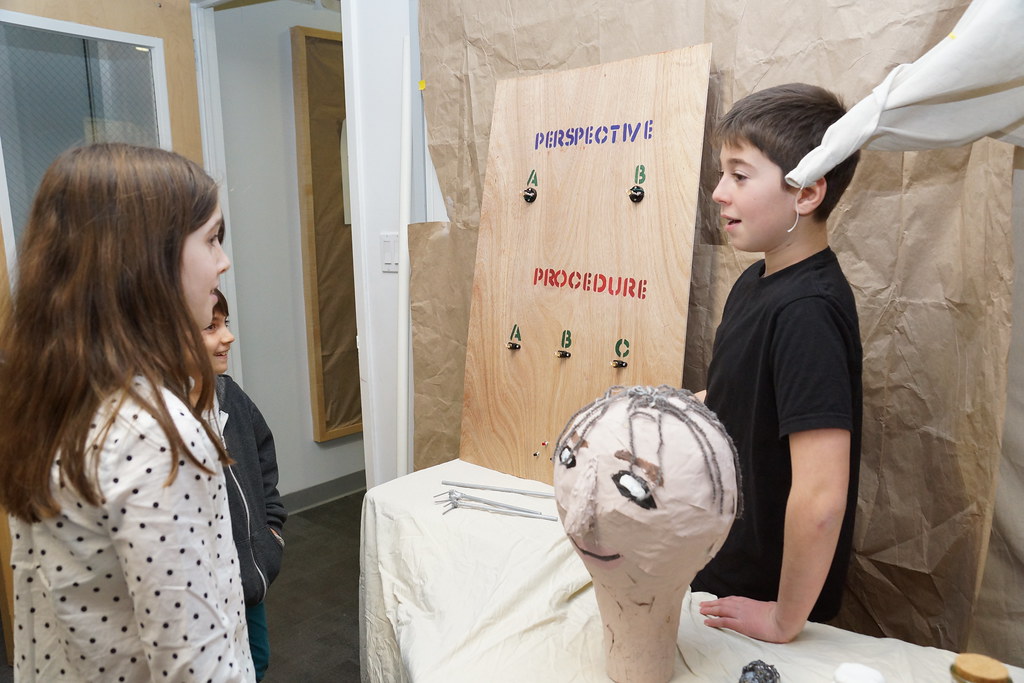


Seventh Grade Colonial Museum
“A Look at the Colonial World Through the Eyes of….”
Name: Wyatt (Charles Williams)
Title of Creative Piece: Yorktown’s Cold, Dark Days
=================================================================
I glance out the window and I can see the lush, green forest in the distance through the morning mist off fall. The leaves are colorful, bright shades of red, orange and yellow. I can smell the fresh, crisp air as drafts float in and out the open window. The atmosphere of the town is mellow and tired. It’s a slow day in the shop. Nobody in Yorktown is in need of my services today, so I can catch up on the letter I am writing to my family back home. My father caught the horrid disease known as smallpox and he is in critical condition. I tried to keep my mind off of him, but I must right back. By the time my mother receives the letter, he might already be dead. I am a surgeon just like my father, and I am glad I can follow in his footsteps. I voyaged over to the New World for a fresh slate. It was always hard to find business when a potential patient could just go to my father, who is one of the most renowned surgeons in England. Over here in Yorktown, all I do is carry his name. Yes, I acknowledge that I get lots of business over here because of that, but I am building a reputation of my own. I often venture to other parts of Virginia, which is rare for somebody of my trade. I do not regret coming to the New World.
“Charlie, dinner’s ready!” my sister Elizabeth calls. My body aches as I get up from my bed. My stomach starts rumbling as the the aroma of the beef stew floats into my room. I came to Virginia with my three siblings, Elizabeth, who is 21, Sarah, who is 17 and my brother Walter, who is 18. My sisters and I all work in the Williams Family Apothecary and Surgery Shop. I have my own little room in the back where I keep all of my equipment. I do not operate in the shop, as all surgery is done in the patient’s home. My brother Walter is a surgeon in the military, so he isn’t often home. I miss having him in the house. All of his antics bring back great memories. I really hope that he does not die in the war. We do not see him very often, and he is almost never home, but he still has a room in our house for when he is home. Sometimes, I think I hear his beautiful notes as he sings in the morning, always giving the house a happy vibe. Our house is not massive by any means, but it gets the job done. We are all a part of the middling class, so we can afford more than a one room structure. My siblings and I are very fortunate to have made a good living here in the New World, as many people left England with a lot and now have next to nothing. Tomorrow is Sunday, the most holy day of the week. My whole family, including my parents back home are protestant christians. I would never say this out loud, but as a surgeon, I think everyone cares too much about religion. God never saves you, but surgery does.
I hear a knock on our door, and I pop out of my chair, still groggy from the little nap I had in my chair. My neck aches as I get the door. My best friends wife greets me with wet cheeks, and I know something is wrong.
“Come in, Cornelia,” I say as she walks in, shoulders hunched.
“Abe. It’s Abe. He’s going to die!” Cornelia says. I wonder what is wrong as she blurts out almost unrecognizable words through her sobs.
“He’s concussed! He can’t walk and he keeps vomiting. Nobody ever survives a concussion!” She practically screams as hers sobs became less and less frequent. My face turns white. I know she’s correct. The only surgery my father would perform that had more people die than survive was trephination, the treatment for concussions. Thankfully, I haven’t had to perform trephination too many times, but I know the results: death. My stomach becomes hollow as I realise my best friend is going to die. “I will still try,” I tell Cornelia as I stumble out the door. We run to her home and I threw open the door. I am greeted by the smell of vomit in the dank, musty house. Cornelia rips the tablecloth off the dining room table as I grab my tool box and hual it into the dining room. I can barely carry Abraham and I almost trop him before I reach the table. I don’t even need to think as I whip out my scalpel and trephine, before I realise Abe needs to be in a chair. Cornelia grabs a chair and slides it across the floor and I put him in the chair. I don’t even grab my coin to trace the cut. I free hand a circle of skin on the top of his head. My scalpel is new and sharp, and the cut is clean. I peel off the newly cut skin as I position the trephine on top of his head. I crank the trephine as it slowly drills through his skull. The crunch of the bone makes me cringe, but I keep going. I finally cut all the way through, and I wait as blood and water seep out of the opening. After a few minutes, the leakage is miniscule and I cover the abyss in Abe’s skull with silver. Maybe the so called healing powers that silver has will save my best friend Abe.
I have done surgery for as long as I can remember. From helping my father in his shop back in England to performing in my own shop here in Yorktown, my whole life revolved around surgery. My purpose as a surgeon was to save lives and innovate the field in England, but here it is much more. My biggest, most important job is now to make sure the colony of Virginia survives and excels. We almost collapsed after a few years in Jamestown, and we cannot allow for that to happen again. The colony needs to grow, and people need to be alive and well to do that.
Miles F Humanities
11/15/16 7 A
I am Walter Williams. I am 20 years old. I work on the battlefield as a surgeon. It is so tiring working on people. It is also very sad. I see so many people die. I also miss my family so much and every day I think of them. My parents both died when I was young so I don’t really remember them, but I still miss them. They might be the reason I am a surgeon. I like being a surgeon because it makes me so proud when I save someone’s life.
My brother and two cousins are all I have in terms of family. My brother’s name is Abraham Williams and he is the closest person in the world to me. My cousins names are Olivia Williams and Elizabeth Williams. They are like my sisters. I miss all of my family dearly but I know that am doing the right thing and the thing that I love. When the war is over I will work at my family’s apothecary with Olivia, Abraham, and Elizabeth. I am sure I will love it as much as I love working in the army. My family comes from the middle class. Even though I work in the military and I love it sometimes, I wish I could make a little more money so I could help my family economically.
Every day a huge number of people need help from me, it is very tiring and draining. I work all day long. Most of the problems I deal with are infections or gunshot wounds. I have to work very fast on people because every second I waste, the likelihood of the person dying gets bigger. The thing about surgery is that you have to get used to people dying right in front of your face. Sometimes that can be really hard. Sometimes I have so many people to help that I just have to amputate the part of the body that has an issue. Amputation is the fastest and easiest way to get rid of someone’s wound. That is why when I have so many people to deal with, I just have to do amputation. The scariest part of my job is working so close to the battlefield. You hear everything, the guns shooting and the screams of dying men fighting for freedom. The sounds of everything gives me nightmares.
Right then a soldier screams and says, “Walter, you might want to get ready for a big group of soldiers. There has just been a canon explosion and it connected pretty well with some men. There are about 40 soldiers that have been wounded. You’ll have to be pretty fast. I’ve got news that some of them are pretty close to death.”
When the first soldier comes the wound looks very serious, and I immediately know he will need amputation so I say, “I’m sorry to bare the bad news, but you will need amputation on your leg. Unfortunately, this is the end of your time in the army. But fortunately, you will survive.”
The man replies with crying at first and then he says, “thank you for helping me.”
Then I start the surgery. After the surgery I send him away and wish him good luck outside of the army. The thing that you have to know when you are a surgeon is how to be kind and gentle with the soldiers as you might be telling the man the worst news of their life.
I have dealt with a lot of conversations like this one. Sometimes it makes me sad to see a man leave the war. Sometimes I get upset that I am the person that tells them to leave and that I changed their life completely. At first I couldn’t handle myself, but after a couple of weeks in the war, I got used to doing these kind of things. Amputation is definitely the most sad surgery because you are completely changing the person’s life. Also, it makes life ten times harder than it used to be. I wish that there could be a better way to treat wounds. I wish that us surgeons could learn more medical procedures, that are more effective and helpful in the long term. Unfortunately, this is how most musket and cannon ball wounds go. Even though my job is sad I must do it because if I don’t the army will lose even more lives.
Wyatt Wolfman:
Surgery in the Colonial period was just becoming its own field and forming its own identity from other medical jobs. With science and religion becoming increasingly separated, surgery was becoming less like religious, medical jobs like the physick. “Surgeons made up another category of trained healer. Surgery and medicine were considered separate fields, although the lines were beginning to blur and would eventually disappear altogether. Medicine, or ‘physick,’ was an intellectual, gentlemen’s skill; surgery was a manual trade, and thus had lower status. Many surgeons learned their skill in the military and continued to practice after their discharge. They set broken bones, removed cataracts, and amputated diseased or injured limbs.” (Tannenbaum, Rebecca J. “Health and Medicine in the 17th Century.” American Centuries, vol. 2, Facts on File, 2014). This quote is referring to two of the primary medical jobs: surgery and physick. Even when religion was more important than science, surgery was still crucial. People knew that surgery helped, but they still thought that it was often unnecessary and only God’s blessing was needed. As science quickly closed the gap, surgery and physick became more and more similar in the Colonial Era. This happened because physick became less and less about religion and more about medicine. Physick would eventually turn into the apothecary. With the rise of surgery, there were more surgeons, and more surgeons meant more tools needed to be made.
Miles Friedman
Surgeons in the Colonial Era came from many different backgrounds; there was not a singular pathway to becoming a surgeon. For instance, people came from many different backgrounds, including becoming a surgeon because that was the family trade, attending medical school, and being a general apprentice in a shop. Even though these people would come from many different backgrounds they would still learn the same material from their experienced surgeons. Surgeons came from many different social classes. In the town, surgeons were usually from the middling class, but on the battlefield, they could come from any background. Surgeons were hard workers because they did not make a lot of money, and would take jobs outside of medicine and surgery to support their families. For example, sometimes your surgeon would be a dentist or barber in order to make more money to help their family economically. But the English did not have enough of these hardworking surgeons. Sometimes surgeons were more preferred than others, and higher quality surgeons had more patients. This resulted in surgeons having higher ranks. They were devoted to saving people’s lives, and knew that once they got in the career of surgery the only way they would make a lot of money was by getting to the top. This meant that surgeons had to be willing to dedicate a lot of time and effort to become a surgeon. One of the ways people became surgeons in the colony was by general apprenticeship.
Lindsay O. 2015
Because sickness and disease was common, and people often died because of it, it lowered the average life expectancy. The Europeans, Africans, and Native Americans all had different ideas and beliefs about healing ailments and disease. But when they were brought together in one area, the colony of Virginia, they affected and changed each other more than they thought. Africans had relied on herbalism, but when meeting the Europeans they changed some of their beliefs. The Europeans changed when the met the Native Americans because they used little herbs and natural products before coming to the New World. Surprisingly, the Natives really didn’t change when the new cultures came over, they stayed secluded in the woods, not often making contact with the different cultures. Think about it, if there had been no medicine, none at all, then we would have died off. The world would be human-free, almost no pollution, and the ozone layer would be strong. It would be paradise. So which would you choose a world of paradise without humans? Or the world that we have today with humans, but also with pollution?
Willem S
2015
What happens if you push your finger or any tool too deep into the gun wound? What should you do if there is gangrene in the area? How do you remove the splinters, cloth etc from the wound? Are there tools that work best for this specific procedure? Does different areas of the wound affect the procedure or not? How do you seal the wound? What if the patient is loosing blood too quickly? What should you do if you can’t find the ball? Is it necessary to cut off the blood from that area of the body during that specific procedure? Do you sterilize to tools before this procedure, or any? It seems that gunshot wounds are the most fatal of all types of wounds. It takes in splinters and pieces of clothes which affect the wound and makes it more difficult to cure. I think that depending on where you are shot, like the stomach affects if you can save the person or not. A shot to the stomach, would probably tear you major arteries and anything inside, not just tearing flesh. Gangrene would possibly mean amputation, but gangrene in the stomach, I would guess would mean death. There’s nothing to separate except flesh. I think it would be better to push your finger into the bullet hole first to search for a bullet, because you can feel what you’re touching inside. it would be fairly more difficult to feel the bullet with a probe. Anything which keeps the patient in less pain, is effective. I think that in that time period, they wouldn’t sterilize their tools because they hadn’t yet discovered germs, therefore meaning that they won’t sterilize their tools, but just wipe the blood off. I think if you were shot by a bullet, you would probably have about a 15%-20% of surviving because sticking anything into a wound with germs would add bacteria into the wound, witch would make the flesh decay, causing gangrene, which would eventually lead to death. But, if you were lucky, you would just have a large hole in your body once the bullet is out, or you would just have to amputate your limb. So I think that means you wouldn’t want to be shot by a bullet.
Miles Friedman
Notecards
Tannenbaum, Rebecca J. “Health and Medicine in the 17th Century.” American Centuries , vol. 2, Facts on File, 2014. American History , online.infobase.com/hrc/search/details/358046?q=colonial surgery.
“Many surgeons learned their skill in the military and continued to practice after their discharge. They set broken bones, removed cataracts, and amputated diseased or injured limbs. Surgeons made up another category of trained healer. Surgery and medicine were considered separate fields, although the lines were beginning to blur and would eventually disappear altogether. Medicine, or “physick,” was an intellectual, gentleman’s skill; surgery was a manual trade, and thus had lower status. Many surgeons learned their skill in the military and continued to practice after their discharge. They set broken bones, removed cataracts, and amputated diseased or injured limbs.”
Surgeons in the colonial period learned how to do surgery on the battlefield. Some of the things the surgeons learned during war were how to set broken bones, get rid of cataracts, and amputations of limbs. Surgeons made a new category of trained healer. Surgery and medicine were considered different jobs but overtime they became the same. Physicks’s was a rich mans skill; Surgery was for poor men and they had lower status. Surgeons learned their skill in the military and they continued to do surgery after the war. The surgeon’s set broken bones, removed cataracts, and amputated diseased or injured limbs.
This quote shows that a lot of the surgeons learned their techniques from the battlefield. The surgeons on the battlefields saw broken bones, gun wounds, infections, severed limbs, and disease. Surgery was a gentleman’s job and never a woman’s job. In the early times of colonial America surgery and medicine were complete opposites, but later on they became one and the same. The surgeons started out as focusing only on physical aspects of medicine. The physicians focused on medicines and bleedings. I wonder what bleedings are? I think bleedings are when you test someone’s blood to see if there are any problems. Some of the colonial physicians had a lot in common with the medieval doctors. While the surgeons and physicians started out having very different responsibilities over time their jobs became more similar. Surgeons had a lot lower status because surgery was a manual trade. Physicians however, were thought of as a skilled trade and learned their job by apprenticeship. This gave the physician’s higher status than the surgeons. Since surgeons and physicians did not get paid well they would often switch their trade to farming or school teaching. I can infer that surgeons did surgery because they had a passion for helping people. I can also infer that the surgeons went into surgery knowing that they would not make a lot of money.
Created: 10/11/2016 10:48 AM
Lindsay O. 2015
Title: Snake Spirit Animal
Source: “Native American Animal Symbols Native American Zodiac Meanings.” What’s your sign. N.p., n.d. Web. 10 Nov. 2015. <http://www.whats-your-sign.com/
native-american-animal-symbols.html>.
Quote: “Most shamans are born under this Native American animal symbol. The Snake is a natural in all matters of spirit. Easily attuned to the ethereal realm the Snake makes an excellent spiritual leader. Also respected for his/her healing capacities, the Snake also excels in medical professions. The Snake’s preoccupation with matters intangible often lead others to view them as mysterious, and sometimes frightening. True, the Snake can be secretive, and a bit dark – he/she is also quite sensitive, and caring. In a supportive relationship the cool Snake can be passionate, inspiring, humorous, and helpful. Left to his/her own devices, the Snake can be despondent, violent, and prone to abnormal mood swings.”
Paraphrase: – The Native Americans had spirit animals and whatever sign you were born under, supposedly you had that power.
– Snakes often had spiritual power and had a strong power in Medicine.
– Snakes could be different from normal people. They were powerful so many feared them.
– Snakes sneaky and conniving, but they express their true feelings.
– Snakes should not be alone without a tribe or a family.
– They’re natural spiritual leaders because they are respected because of their power.
Analysis: I wonder if all the spirit animals are good at specific things? What are some of the other ones? I know the Native Americans went on spirit walks by themselves for a couple of days and in that time you would learn what your spirit animal was, what if you didn’t find out what it was? Was it bad if got a certain symbol, are there any bad symbols? Did a tribe have a symbol? Were spirits ever depicted in Native American art? If they saw a real snake what would they do? Would they kill it for food? Leave it be? What kinds of magical power did people have. Did whatever you have depend on what you would be when you grow up? Did Shamans communicate with the spirits for advice?
“GUNSHOT WOUNDS- These are much more difficult to cure than an incised wound, clothing and splinters are carried into the wound with the ball, tissue fibers and vessels are destroyed. Inflammation. possibly turning to gangrene, may make amputation necessary. Search for the ball with a probe. finger or forceps as little as possible. for it will increase the pain and inflammation. It is best not to go after anything beyond the reach of the finger. M(many feel the fingers the best and truest.)”
What happens if you push your finger or any tool too deep into the gun wound? What should you do if there is gangrene in the area? How do you remove the splinters, cloth etc from the wound? Are there tools that work best for this specific procedure? Does different areas of the wound affect the procedure or not? How do you seal the wound? What if the patient is loosing blood too quickly? What should you do if you can’t find the ball? Is it necessary to cut off the blood from that area of the body during that specific procedure? Do you sterilize to tools before this procedure, or any? It seems that gunshot wounds are the most fatal of all types of wounds. It takes in splinters and pieces of clothes which affect the wound and makes it more difficult to cure. I think that depending on where you are shot, like the stomach affects if you can save the person or not. A shot to the stomach, would probably tear you major arteries and anything inside, not just tearing flesh. Gangrene would possibly mean amputation, but gangrene in the stomach, I would guess would mean death. There’s nothing to separate except flesh. I think it would be better to push your finger into the bullet hole first to search for a bullet, because you can feel what you’re touching inside. it would be fairly more difficult to feel the bullet with a probe. Anything which keeps the patient in less pain, is effective. I think that in that time period, they wouldn’t sterilize their tools because they hadn’t yet discovered germs, therefore meaning that they won’t sterilize their tools, but just wipe the blood off. I think if you were shot by a bullet, you would probably have about a 15%-20% of surviving because sticking anything into a wound with germs would add bacteria into the wound, witch would make the flesh decay, causing gangrene, which would eventually lead to death. But, if you were lucky, you would just have a large hole in your body once the bullet is out, or you would just have to amputate your limb. So I think that means you wouldn’t want to be shot by a bullet.
Miles Friedman Interviewing Carol,
Wyatt Wolfman Interviewing Cory, Jamestown Interpreter:


