
Archives
Women and Women’s Rights: Analysis
Jemma Fox
2016
Marriage and Courtship
Family was a big part of a woman’s life. Most women would have children and to have children you needed a husband. Women would rely on a husband for most things almost all women in Colonial America were married. An unmarried woman was considered to have failed her duties as a women because they were expected to have children and support a man’s property. The women were expected to provide for a husband not provide for themselves so not marrying was a let down her family. Also if she didn’t marry and can’t provide for themselves the parents have to so not only has she let down her parents, now the parents still have to pay to provide for her as an extra burden on her parents. If a woman does marry though and they live a happy life all’s well. But if a woman is unhappy with her marriage and decides to file a divorce she would be considered more criminal than if a man filed for divorce. Women were depicted inferior to men because Eve ate the poison apple in the Garden of Eden. The men thought the women were going to make another giant mistake that would alter the course of humanity. “Marriage was the rock of a stable society it created order and provided restraints for that reason everyone had a duty to marry. An unmarried woman not only failed in her duties but also added to her parents burdens as they continued to feed and clothe her. The Bible taught that he had seduced Adam into sin by offering him a forbidden apple in the Garden of Eden. The colonists, it seemed easy action had branded women as troublemakers and temptress the daughters Eve in Colonial America were depicted In books and sermons as the weaker vessel women we’re supposed to be easily misled tempted by flattery and given to extravagance.” I think it is unfair that the people who wrote the Bible had something against women and depicted Eve, a very important religious figure as a bad person, so women were never treated equally. Women should be able to make a reputation for themselves instead of men judging them because someone wrote it in a book hundreds of years ago. It’s unfair that because women have a bad reputation, it is harder for them to support themselves. That’s why more women than men married. Women had a hard time making a living so if they stayed unmarried it made the parents still have to pay for the woman because they can’t support themselves. It was considered that if a woman broke her vows or the man did the woman was doing more of a wrongdoing. Women should be just as criminal as men if they break their vows. That is sexist and stupid. If someone was mad at their husband and broke their vows, then their husband also broke his vows they should be just as shamed as their husband. It is not fair that someone would look worse than their husband because someone was born a female. No one can’t help the gender they were born.
Alexa Moskowitz
2015
Add Title
Women and their roles were essential to the creation of colonies. Whether it was upper class, middling, lower class, African, English, or Native American they were all crucial. Even though they were really important the men didn’t think so and they minimized them. But we now know that women were great at so many other things and that without them the colonies wouldn’t have survived. Women did so many jobs like: cooking, cleaning, soap making, candle making, farming, gardening, caring for children, tending to the sick people using herbal remedies, and much more, but nobody thought twice about them.
Women and Women’s Rights: Notes
Jemma Fox
2016
Witches in Colonial America
Meltzer, Milton. Witches and Witch-hunts A History of Persecution. New York,
Blue Sky Press, 1999.
“At least 344 persons were accused of witchcraft in New England between 1620 and 1725. Nearly four out of five were female. The victims were women with freckles or a birthmark, old women, uppity women, women with property, women who were healers and who continued to pay tribute to mother earth and goddess religions, women who were “in league with the Devil,” women who today would be labled mentally ill, women who enjoyed sex, a woman who resisted some man’s sexual advances, and on and on and on… ”
Paraphrase:
- Lots of woman were convicted of being witches
- 4 out of 5 people convicted were woman
- if you had skin marks like freckles, or birthmarks you could be convicted
- old woman uppity women or woman with property were also convicted
- women who pursued a career in superstition would be convicted
- meantally ill woman and woman who enjoyed sex or resisted sex
My Ideas:
Woman would be wrongfully convicted in killed because of superstition. They would be killed for no good reason and more that 3/4’s of them were woman. If I was born with a mark on my skin I could die for it! People believed in witches and other people couldn’t believe in different forms of superstition like healing without being convicted. If I liked sex I could be convicted and killed, if I didn’t like someone who a lot of people did I could loose my life for that too.
Alexa Moskowitz
2015
Colonial Women’s Roles
Source?
“When they arrived in the colonies men and women alike had opinions about the proper roles in family and society that people should fill according to their gender. Most accepted the prevailing view that women were inferior to men and should be meek and obedient. Male colonists enforced these views though both religion and law. Women in the colonial period did not have the same legal rights as men and, in fact, often lost rights as individuals when they married.”
Paraphrase:
- Men were treated with more respect than women
- They thought women were lower class than men
- Some women were treated as if they were invisible
- Some native american women were maids or cooks for their masters
- Some were servants
- The very lucky women would become famous from doing heroic things during the war
My Ideas: Women in the Colonial era were not treated with as much respect as the men were treated with. Women were treated sometimes as if they were invisible. They did not have as many rights or freedom as the men. Such as, they were thought of as the lower class, they weren’t allowed to fight in the war, and they had to stay home and do housework all day. From an English woman’s point of view life was not bad, but not as glamorous as the men’s life. To add on to them not having much freedom, when they married, which they had to, they lost a lot of the little freedom that they had to begin with. I don’t think that’s fair because women are just the same as men, girls are the same as boys, I think everyone should be equal. Although they didn’t have many rights some lucky women who wanted to be different would do something heroic and become very famous. For example, Nancy Hart became a famous war hero by capturing a group of British soldiers at gunpoint. She was treated with more respect after that. Yet still the women were not treated with respect. Why were women treated like this? What did/ people think men were capable of that they weren’t?
Name?
2015
Title of card?
Twist, Clint, ed. Colonial America. Connecticut: Sherman Turnpike, 1998. Print.
English Colonial Women #3, Woman Interpreter. “English Colonial Women.” Woman at Jamestown Site. N.p.: n.p., n.d. N. pag. Print.
“She’s Spending most of her time in the garden. And most of her time in the kitchen with her girls teaching them how to do the gardening. They have to know how to dry food.”
“Stews, pies, bread, soups are what they would like to cook because it was the most available on a regular basis”
“The farming was done by the boys mostly with the farmer”
“The lower class women did less housework and more slave like outside work. The women in the middle class had a surprising amount of social and economical freedom, more than the gentry and lower class. The middling class can pursue their own interests and marry for love, they have more of a say on what’s happening on a daily basis. The upper class women are removed from the world The upper class women’s jobs are more mental than the more practical work of the middling class.”
Paraphrase: (see quotes)
My Ideas: People in the colonial times were split up into three main groups were: The Gentry class, which was the highest, The Middling sort, the middle class, and the meaner sort, the lowest class. Most people who haven’t done research think that they want to be in the upper class, but I figured out that being an upper class woman in the Colonial era was not as much fun as people thought. They were cut off from the world, sitting and sewing all day, they had no say whatsoever in anything that was happening around them, and they, for the most part, couldn’t marry for love. While yes, they were getting an education, it wasn’t an education to get them ready for when they married or what they were going to do, it was playing an instrument and learning how to speak with proper pronunciation, which really isn’t that helpful. Also, the work that they were doing was more mental than the middling and lower class whose work was more practical and quite frankly more crucial to a growing colony. The middling class women had a surprising amount of freedom, more than the upper class. They would do outside farm work, gardening, cooking, drying food for the winter, sewing, making clothing, raising animals and people. They also had a say in what they did on a regular basis and what was happening around them. For example, they didn’t really have arranged marriages so they could marry for love. The lowest class women would basically do the same work as the men, more slave like work, a lot of labor definitely. If I had to be a woman in Colonial America I would want to be in the middling class for sure.
Women and Women’s Rights: Photos


Women and Women’s Rights: Interviews
Jemma Fox
October 2016
Recreational Williamsburg Wig Maker Interpreter:
- Wigs were mostly used to show how rich you were – Recreational Williamsburg Wig Maker Interpreter
- There were tons of different wigs for different occasions – Recreational Williamsburg Wig Maker Interpreter
- The women’s wigs were meant to make them look pretty and mannerly, while the men’s wigs were supposed to make them look wise and important – Recreational Williamsburg Wig Maker Interpreter
- Wigs were more about the impression they made on other people, than how they actually looked – Recreational Williamsburg Wig Maker Interpreter
- There was something called the homespun ball where women would dress up in their homespun clothing to protest against the non importation act
Margaret MacGillivray
- Weaving is considered men’s work
- If you want to be the head of the household, you must be declared as a fem seoul
- If you have a husband, everything you do is under him
- The four jobs that women can’t have all require going to school and learning latin. These four jobs are lawyer, doctor, government and priest
- Since Williamsburg is so small, every single thing a women does is known by all
- When Grizzle Hay’s husband died, she turned her house into a boarding house and there weren’t judgements passed about her
- Men couldn’t be midwives
- The enlightenment period was when people started using more science, and that’s when men started being midwives
- Spinning is considered women’s work
- If you saw a gentry man doing housework, people would pass bad judgement about that man because of the social status Interpreter
- Women were also ways to show how rich you were, because richer people wanted women who knew how to sew and cook, even though they wouldn’t be doing that work, the slaves would
- When Peyton Randolph married Elizabeth Harrison, it made him look a lot better – Williamsburg Weaver Interpreter, October 2016
Soldiers, Militias & Weaponry: The Exhibit


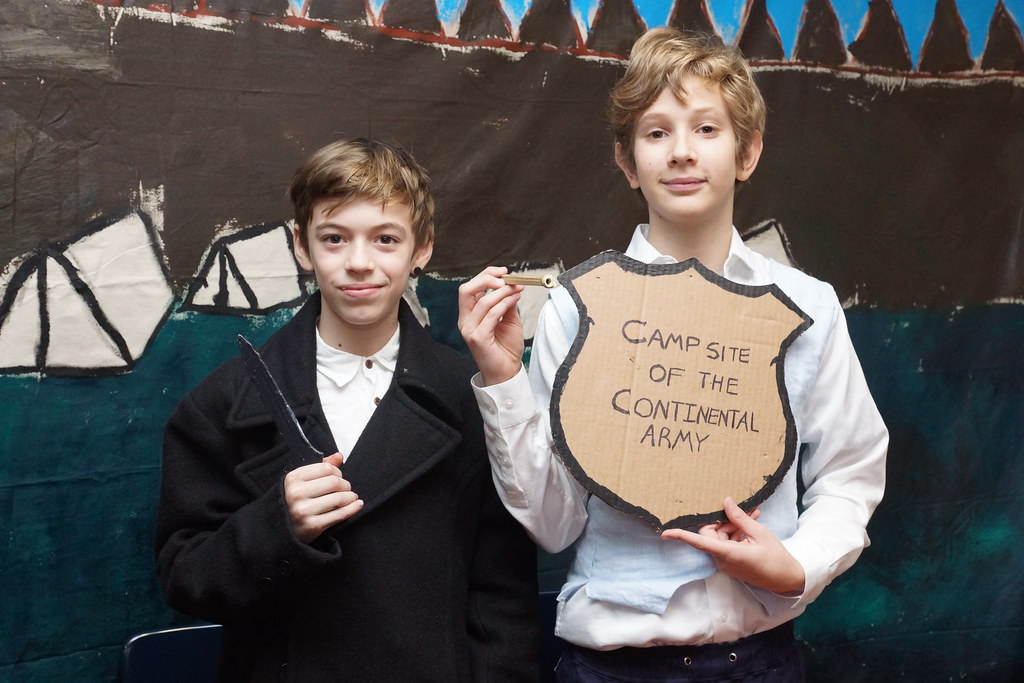


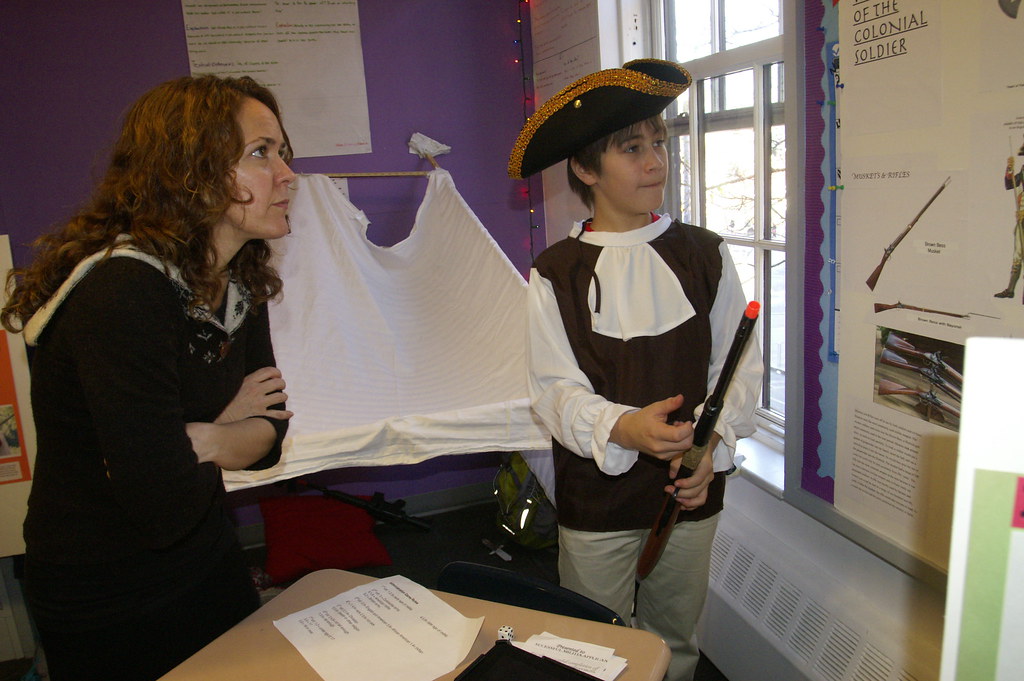


Soldiers, Militias & Weaponry: A Day in the Life
Oliver Eig. The Last Day Of The Life Of Terrance Brimble 11/15/16
Humanities GSS7B
I wake up in my tent, hearing the far off bass tones of the front line. The heavy dead weight of Gideon, Henry, Joshua, and William pressing against me. I get up immediately as I awoke to escape the horrific stench of body odor. I brush open the “door” of the canvas tent and become blinded by the magnificent, scorching, Virginian sun. I pick up my discarded musket from the long day of yesterday’s fighting. I see Lieutenant Taylor stride towards me.
“Private Brimble, find your squad on the front line and work the howitzer,” He commands.
“Yes, sir,” I respond.
I march over to my horse, Daisy, and climb onto her back. I grab the reins and give her a sharp kick to the side.
“Huzzah!” I cheer. Then we are off, bounding through the woods, and onto the field. Shortly, I can see the beat up sandbags and the bloody frisian horse defense mechanism of the front line. I reach a small campfire surrounded by other tents. I immediately see Frank, Douglas, and Tristan, the members of my squad.
“Gentlemen, Lieutenant Taylor wants us to go work the howitzer,” I call.
“Got it, we will meet you there in five minutes.” Frank responds for the group. I nod towards them in understanding, and gallop the rest of the way to hell.
Finally, I reach the front line and hear the terrorizing boom of artillery. I dismount Daisy and give her an apple for her service. By now my squad must surely be on their way. I jog over to one of the howitzers nearby, shoving my fingers in my ears desperately trying to shield my delicate eardrums from the force of the exploding gunpowder of artillery. I lift open the lid of a whining ammunition box and pick up one of the heavy artillery pieces.
“Here-let me help you with that,” Douglas spits out, nervous with anticipation.
“Thank you,” I respond, as he puts his hand underneath the huge bullet and shoves it into the howitzer with me. Tristan then locks the ammunition into place in the howitzer, while Frank holds his firing torch at the ready. All of a sudden, a trumpet sounds, and Frank drops the torch onto the ammunition, sending it high into the heavens, and down onto the enemy line. I hear the faint screams of pain in the distance. I back away from all of the chaos to collect my thoughts. Then a British howitzer shell breaks right on top of our howitzer, sending hot pieces of metal into our squads necks, including mine. I am sent sprawling from the blast, the life draining from my body. I touch my spasming hand to my neck, and look at it. It is covered in a deep crimson red. I relax my neck, close my eyes, take my last breath, and fall into an eternal sleep, knowing of the service that I had provided to my country.
Milei
2016
War through a musician’s eyes
=================================================================
I am a soldier in the middle of battle in the large terrain filled with rampaging soldiers. I can hear canons from afar and see them crashing one after another. The weather is cloudy and dreary and the trees around us are large and tall. Some soldiers are weak and are probably ready to die soon but most soldiers are behind big mounds of dirt protecting themselves from their enemies. Large, strong horses retreat away from the dreadful scene. It is now 1779, three years since the war has started. I always feel like this will be a never ending war but a little bit of me also knows that someday this war will end. I wonder everyday who’s going to win and if I will even be alive by the time the war’s over. All around the battlefield you can smell the scent of gunpowder and burning fire. It always takes awhile to get used to that scent. In the camps it’s a totally different space. The smell stays the same though since soldiers practice or test out their weapons. Within the camps every soldier is also always hungry. We each don’t get that much food but the whole army has stocks of food. The reason why we get low portions of food is because the army want’s to save up all of the food for who knows how long. Fatigue duty was something every soldier had. Fatigue duty is when a soldier has to do certain chores around the camp like building shelter, cleaning the camp grounds, gathering hay and much more other things that had to do with keeping the entire camp clean. Even though the camps are clean the soldiers are not. We don’t bathe a lot so soldiers are not hygienically clean.
I am part of the middling class and I am also part of the militia. I don’t really fight that often because I serve as a musician in the army so during battle I always have my drum with me so I can represent my company. I also a carry around a fife with me in my pocket but that is an essential to every soldier. The fife is like a flute but smaller so it is very light. Being a musician in the army is a lot of work. I support everyone and everything in the army everyday so being a musician keeps me very occupied. I don’t only play music though because I also have to do my drills and daily jobs. Most of my time though is taken by practicing my drum. People in the army see me as their supporter. It feels like they rely on me and focus on the rhythm I’m making.
When we march we usually have everything planned out already. It is also a long expedition of walking and we don’t have a lot of food brought with us so it is also a pretty gloomy trip. All the food we get is some stale bread and flour and we are so hungry to the point where that can even taste acceptable. The wagons are loud and big and they are heavy and look like they are ready to explode. We fill the wagons up with our weapons and tools.
- When being the musician, I feel like everyone’s eyes are on me all the time, waiting for the signal. Being In the middle of the battlefield and all I have is my drum with me and weapon at my side. I wouldn’t say all the other soldiers thing I’m their leader but their supporter. The gruesome scene of war that we see everyday yet I always stand to the side playing the same beat over and over again. And that’s my life as a soldier.
Soldiers, Militias & Weaponry: Analysis
Spencer Rosenblum
2015
Colonial soldier life analysis (from research paper)
The life of a colonial soldier was a very dangerous one that was very important. The soldiers had an awful daily life, bad weapons, bad medicine and surgeons, the African soldiers being discriminated, the Native Americans had to team with the enemy to get there own land back from those very people, dangerous battle tactics and information for battle techniques which were probably wrong. But without these soldiers taking these odds, and continuing to take these odds to this very day the world would be awful, because all good things come from conflict.
Cole Dorsey
2015
Colonial soldier life analysis (from research paper)
The soldiers would have to work very hard not only in battles but in training. The rewards of being a soldier were not much. To be able to survive a war you had to be willing and able to fight for your country. That is why fighting as a soldier was very difficult and took skill. To be a soldier you had to know how your gun worked, know how to fire, know the commands to fire a musket, attend Church and how medicine worked. There is so much that the colonial soldier must know from how to spy to how to become a soldier when starting as a militia man. Soldiers had a significant impact on everything in Colonial America and even now. If soldiers did not do what they did we would not have won the wars that they won. The Natives and Africans also played a big role in the soldier’s life. The Africans fought in the wars and helped out the European soldiers. Natives helped progress the weapons that we use to this day. Thanks to all of these cultures we are where we are today. Thanks to the soldiers smart tactics and thinking they were able to win the war and beat the British which would lead to this great country being born.
Aidhan
2015
Last paragraph of paper:
All of those three cultures had different weapons and tactics, each with advantages and disadvantages. Without weapons and tactics, no culture can survive. The Patriots, in a way, are all three cultures combined, and were victorious because they had all of the key elements of each culture. Today, we as Patriots, are still learning to defend against different enemies and need to keep adapting our weapons and tactics accordingly.
Oliver Eig
December 15th 2016
The Native American and the English culture both used weapons to force different people and animals into certain situations where they could control them. The Africans were enslaved by the English, so they didn’t have access to weapons. In fact, many weapons were used against them as a way of keeping them from rebelling. The technology of weapons met the needs that they had back then, but over time they continued to develop and grow. The Native American weapons and the English weapons were similar, if not the same, since the Native Americans traded for the English weapons because they were more effective. But they were similar because they used weapons to get what they wanted when diplomacy didn’t work. This is significant because it shows how weapons shaped the world’s history, because without weapons, perhaps conflicts would not escalate to the same level that they do today. If diplomacy failed during the Revolution, then we would have not have had another option, such as using weapons, which allowed us to brute force us in creating our own country.
Milei
2016
Being in the army was very important in Colonial America and it still is to this day. Being organized and having a certain system was an essential part of life in the army and during battle. Without these drills the army would be in total chaos and wouldn’t know what to do in battle. The three cultures were influenced a lot in the army too. The Native Americans were not soldiers, but they made lot’s of different weapons that English soldiers have used before. There were a lot of African soldiers because some of them used to be slaves before they became soldiers, and there slave masters who didn’t wish to serve for themselves in the army would replace themselves with the African Americans. So The three cultures were very important in the army.
Soldiers, Militias & Weaponry: Notes
Marlo Hulnick
2016
Notecards
Black Soldiers in the Revolutionary War
Marlo Hulnick
Source:
Ciment, James. “Black Patriots during the Revolutionary War.” African-American History Online , by Ciment, Rev. ed., Facts on File, 2007. Facts on File , www.fofweb.com/activelink2.asp? ItemID=WE01&iPin=ATAF039&SingleRecord=True.
URL:
http://www.fofweb.com/activelink2.asp? ItemID=WE01&iPin=ATAF039&SingleRecord=True
Quote:
“When war between the colonists and Britain finally began in April 1775, African Americans—at least, the small proportion not enslaved—were faced with a dilemma: fight alongside their fellow colonists who denied them full membership in society or side with the British. In fact, black colonists had a long tradition of military service by 1775, having served as militia men in various colonial wars fought between Britain and its European rivals, France, Holland, and Spain, as well as in numberless skirmishes with Native Americans. Even slaves fought, occasionally winning their freedom in the bargain. At the same time, free blacks and runaway slaves signed up for naval duty, usually aboard independent privateers. Unlike the militia—where they were generally relegated to support positions—the privateers offered black sailors near equality of pay, while the camaraderie of close-quarter shipboard life eliminated segregation and undermined white racist attitudes.”
Paraphrase:
When the Revolutionary War started the free blacks had two choices; fight with the colonists who declined them as a member of society, or fight with the British. By this point in time, the African’s had fought in many wars. Sometimes slaves bargained for freedom if they fought, and also free blacks and runaway slaves joined the naval duty and worked aboard independent privateers. When they worked with independent people, unlike the militia, they usually had the same positions as whites and got close to equal pay.
My Ideas:
I can infer that more African’s chose to be with independent privateers because they got close to equal rights and close to equal pay. That was unusual for that time period because African’s were treated as dehumanized animals. These stereotypical things have gone down since then but still occur today. If it is bad now, how bad could it have been then? Slaves took the desperate and unthinkable measures to be let out of slavery, joining the British. The British guaranteed their freedom if they fought for them. One reason free blacks and runaways usually went to serve on independent privateers was because it was much more fair for the Africans. The privateers got to choose how much they paid their crew, and they weren’t nearly as racist as the military.
History:
Created: 10/31/2016 07:44 PM
William (Gus) A. Dotson 2016
I think it is cool how a lot of the artillery that was used in the colonial era is the original for of some weapon that we still have today. Some of the weapons are still that same and are just more powerful and accurate. I wonder what the of artillery was most common. I suspect that it was the field cannon because most of the battles were fought on open ground so they wouldn’t need a mortar or howitzer because there were few forts and because there were few forts then a garrison cannon was not needed much. I wonder how the cannon operators would transport the cannons because I suspect that they wouldn’t just drag them by hand. I wonder if mortars were ever used on ships because then you could take out another ship by blowing it up. I also wonder what the difference between the howitzer and the mortar is because they seem to do the same exact thing. They both launch a bomb over a long distance.
Spencer 2015
Battle Tactics of Colonial Armies
“The battle tactics used in battle were mostly linear in the main battle field you had soldiers standing shoulder to shoulder all firing together, they’re told by there officers when to do so, but by doing this they were much more effective. The most important thing to do in linear tactics is to try to flank your enemy. People with rifles would fight in gorilla warfare. You would have an infantry, people you send in to the woods and trees to a scout to basically harass the enemy. Gorilla tactics I’m the revolutionary war was used for small scale conflicts. The Americans won the war because they got better at linear tactics then the British. The reason why the Native Americans got wiped out was not because there weapons were better or worse, but because there were to many English to fight. Linear tactics have been around since medieval times. Linear tactics work by having the first row fire and begin to reaload, and then have the second line fire over there soldiers. Ranks were done by height, shorter people in front taller in back. Artillerary was used to break up lines, if there are people marching from 1000 yards away you can’t hit them with muskets, so instead you would fire a 3 pound cannon ball that would break up there lines. It might only hit 2 or 3 people, but imagine the physiological damage it would cause to the person next to them, they just saw someone they know disappear and there job was to fill in there hole this made some men run away. If the army gets within 300 yards they would switch to canister or grape shots it is similar to shotgun shell, it stars hitting more people, but if your this close I might start hitting you I retreated. Siege cannons fired bombs which were hollow iron shells filled with gunpowder with a timed fuse, if it’s cut short it would explode on your heads, but if you left it it would fall and blow you up from below”
- The Number one tactic used in battle was Linear Warfare
- Linear Tactics is battling in rank and firing together
- Officers controled there ranks, and gave all commands on realoding and firing, usually the front row fires and starts to reaload while the back row fires over there soldiers
- Ranks were very effective
- If you had a rifle, or light weaponry, you might be sent in as a small infantry unit, to harass and scout out the enemy, but only for small scale units
- Linear tactics have been around for a while
- Ranks were sorted by hieght
- Cannons were used at 1000 yards to scare off the enemy
- Cannons at 300 yards were used with grape shots and canister shots which worked similar to a shotgun
- If the other army was that close you would start retreating
- Seige cannons were loaded with bombs
- The fuse on the bomb could be cut short to blow up over the enemies heads
I think linear tactics are smart because it uses the most of each musket. Muskets are very in acurate, so one soldier firing one gun is likely to miss, but 20 soldiers firing at once will likely hit someone. I can infer that linear tactics could backfire, because if a bomb explodes right in the middle of a rank, that rank is destroyed. One of the reasons the revolutionary war wasn’t fought the way we fought today, was because the mass of each army for example if there are two armies that have 1000 people in each, most of them won’t find cover so ranks is the next best thing. I think that the cannons are being used very effectively because the cannons are long ranged weapons so the british and continental army were both very efficient with the cannons. Personally I think that being in an infantry unit is way better because it is unlikelly that I would be killed. I think that the cannons could have been used better in the front instead of behind the ranks. How often were ranks broken? How many Infantry units were there? Where exactly would the cannons be? How heavy are cannons?
Cole
2015
Life of a Yorktown Soldier
Source: Colonial Soldier, Interpreter at Yorktown. Interview. Yorktown: n.p., 2015.
Print.
“You would never get enough food, you were always hungry and you get a very brief bite from the one meal a day that you do get. You were always uncomfortable.”
- Soldiers had a very hard life
- You would not get a lot to eat
- You were always uncomfortable
- You were not well taken care of
- You were upset by how poorly you were treated
- People had to live with 5 other men in a cramped tent
- There were snakes and sometimes rats in the tents
My Ideas: If I were a soldier I would be upset too. I can’t believe how poorly they were treated for fighting for their country. People must have gotten really upset by this at some points. I wonder if people were ever so upset by this to rebel? I can connect to the soldiers not being treated well, just like the militiamen having to pay for all materials and equipment. I can infer that some soldiers must have been distraught and brought up this problem with the high officials. Why would some soldiers not do something about this? If they were going into battle how are they supposed to have enough energy and stamina to fight? How are they supposed to win if they are only being fed once a day? This is wrong and it must have been really hard to be a soldier back then. Fighting day and night and always being hungry and always being uncomfortable is not a way to live. How could soldiers share a tent with 4 other men? It must have been really rough and hard. What would happen if something went wrong in your tent. This probably happened because of lack of funding. With the British always taxing you, the Army could not be able to afford nice things and be able to make the Army better. With the British taxing the colonist so badly they stopped paying which started the revolution. When the Colonists stopped paying the British they no longer funded them which is why it was so hard to live in a Army encampment back then. If you were sick or injured you would be sent to the medic who would most likely make your condition worse. Would you want to be a soldier back then?
Aidhan
2015:
“Warriors on both sides went too far. The massacres were horrible. At first the Indian leaders tried to live in peace with the settlers. But some of them realized that it would not work, that it would be the end of Indian ways. The Europeans used up land. They cut the forests and filled the land with people. Indians were hunters. To keep their way in life, the woods had to be protected.”
“One Virginian Governor said “Either we must clear the Indians out of the country, or they must clear us out.”
Paraphrase:
-Warriors on the English and the Indians took fighting against each other too far
-Indian leaders tried to live in peace with the English settlers
-They realized that they would die if they tried to live in peace with the English
-English took up land and filled it with people
-The English used Indians as hunters
-A governor said that the English will kill all the Indians, so the Indians will have to try and fight back
My Ideas:
The English and the Indians sometimes got along, but most of the time not. At first, when the English came to America, the Indian leaders wanted to try and be peaceful with the newcomers. But things started to go wrong. Whenever the English and the Indians tried to trade, one Indian would either get kidnapped or killed. The Indians sometimes retaliated right away, or they would show remarkable patience. Sometimes the Indians would just wait for their chance to attack. As little time went on, the Indian leaders realized that That means that they thought that the Indians would no longer exist if they tried to be friendly with the English. The English made themselves at home. They took land, they cut down forests where people and wild animals were living. Once the Indians tried to talk to the English about what they were doing, but one Virginian governor said that either the English had to kill all Indians and then make them leave, or the Indians would have to do that to the English.
Milei
2016
“Most African Americans who fought in the war took the British side, but hundreds also fought for the patriots. Some were free blacks who believed strongly in the cause of liberty. Others were slaves who were promised their freedom for taking part in the war. Some slaves were placed in the army as substitutes for their owners, who did not wish to serve themselves. In 1778, there were nearly a thousand black men spread across every regiment of the continental army. Black regiments with white officers existed in both Rhode Island and Massachusetts.”
- In war African Americans fought for the British side but lot’s of them also took the patriot side.
- Some African Americans would fight in their owners place
- Almost a thousand black men joined every army across the continent in 1778
- Some slaves were told by their owners that if they joined the war they would be freed
African Americans would usually fight in the army substituting for their owners or they would fight because they believed strongly in liberty. I wonder if the African Americans were treated any different in the army. For example everyone in the army got very low portions of food so would the African Americans get even less? I also wonder if living in the army as an African American was any better then living as a slave. Since when living as a slave you have to serve and work for someone else, but in the army you sort of get a little independence but still have to fight. Also since some African Americans were promised for their freedom if they joined the war, I wonder how many of them joined the war. I can infer that maybe their was a lot or a fair amount of them because if they were promised their freedom after the war then maybe more African Americans would be part of it. But I also wonder if any of the African Americans who were not promised their freedom, tried to escape during the war as a soldier because it maybe could have been a pretty good chance of escaping while everyone was distracted fighting.
Oliver Eig
December 15th 2016
Oliver – Magazine Information
Source:
Williamsburg, VA, Historical Interpreter. Interview. 20 Oct. 2016.
Quote:
“Take that idea of standardization and throw it out the window.”
“You have a huge hodgepodge of weapons going on here.”
Paraphrase:
The militia is an armed institution that every person that is free, landowning, able bodied, and above the age of 16 and under the age of 60. If you are all those things you have to be part of the militia by law. The militia is essentially a bunch of civilians with guns.
The government requires you to have a weapon if you are in the militia. The most common job in Virginia is farming so a lot of people would get a gun that they could use to kill animals on their land. This gun would most likely be a rifle. There is no way to use this as a close quarters weapon.
That is why there were military muskets, which you could spear people with the bayonet. It is standardized so everybody can switch out parts without having to worry about compatibility. This also made switching ammo a lot easier. That is what differentiates the militia from the military equipment wise.
The bad part of having a short barrel is because of the inaccuracy and that it would not be as effective to spear people with.
Almost all of the weapons in the European armies are pretty much the same and work the same way. This makes it so there was never really a weapons advantage between militaries.
The flintlocks in Jamestown were very unreliable, so the matchlock mechanism was a lot more popular The flintlocks in the end of the 17th century was when they started to become reliable and more popular. The flintlock was a lot easier to load and was more safe than the matchlock which had a burning piece of rope that could blow them up.
“Take that idea of standardization and throw it out the window.”
Everybody was using different weapons.
Some were using English muskets some were using French muskets some were using shotguns.
From home and some people were using Dutch guns.
“You have a huge hodgepodge of weapons going on here.”
The next big leap in firearm technology will be the percussion cap which is a tiny little copper cap that is put over a tube that gets hit by a hammer. It is filled with mercury so when the mercury gets crushed it is always gonna spark.
My Ideas:
The Americans had a magazine in Williamsburg because they needed a place to store gunpowder and weapons. The way the historical interpreter talked about everything made it seem like the Americans were desperate, probably because they are aware that they are small and that Natives might attack them, or that another country might attack them, assuming that this is before the Revolutionary War. All of this information is important because it is talking about all of the different types of weapons and their best uses in the Revolutionary War, in which without the Americans having weapons we would have lost. I wonder why the Americans had a militia and a military? I infer that this is because they did not have a big enough military to post throughout the colonies, so they would station their military troops in important areas and have each colony have their own untrained militia. I understand that most people during this time were farmers but what if someone wasn’t a farmer? How would they choose what weapon to get then? I am also confused about why they had bayonets on their muskets if they could just slash them with their swords. Were there any soldiers that had rifles if they were mostly engaging at long range? Or did they all just have muskets in uniform. I think that it is really cool that all of the guns in the European armies were the same, but what about the swords? Were there any trends in European swords? Or did they all have a different style to them? What was the breaking point in the end of the 17th century that made it so flintlocks were more popular than matchlocks? I think that it is so neat how guns evolved in the span of 200 years, this makes me think about how our guns will look like in 200 years. Maybe we will all have laser guns? Who knows?
History:
Created: 10/24/2016 09:42 AM